Common backgammon mistakes.
Most improvement does not come from memorizing spectacular moves. It comes from noticing ordinary leaks early: inflexible stacks, disconnected builders, automatic hits, unsafe racing, and cube decisions made one roll too late.
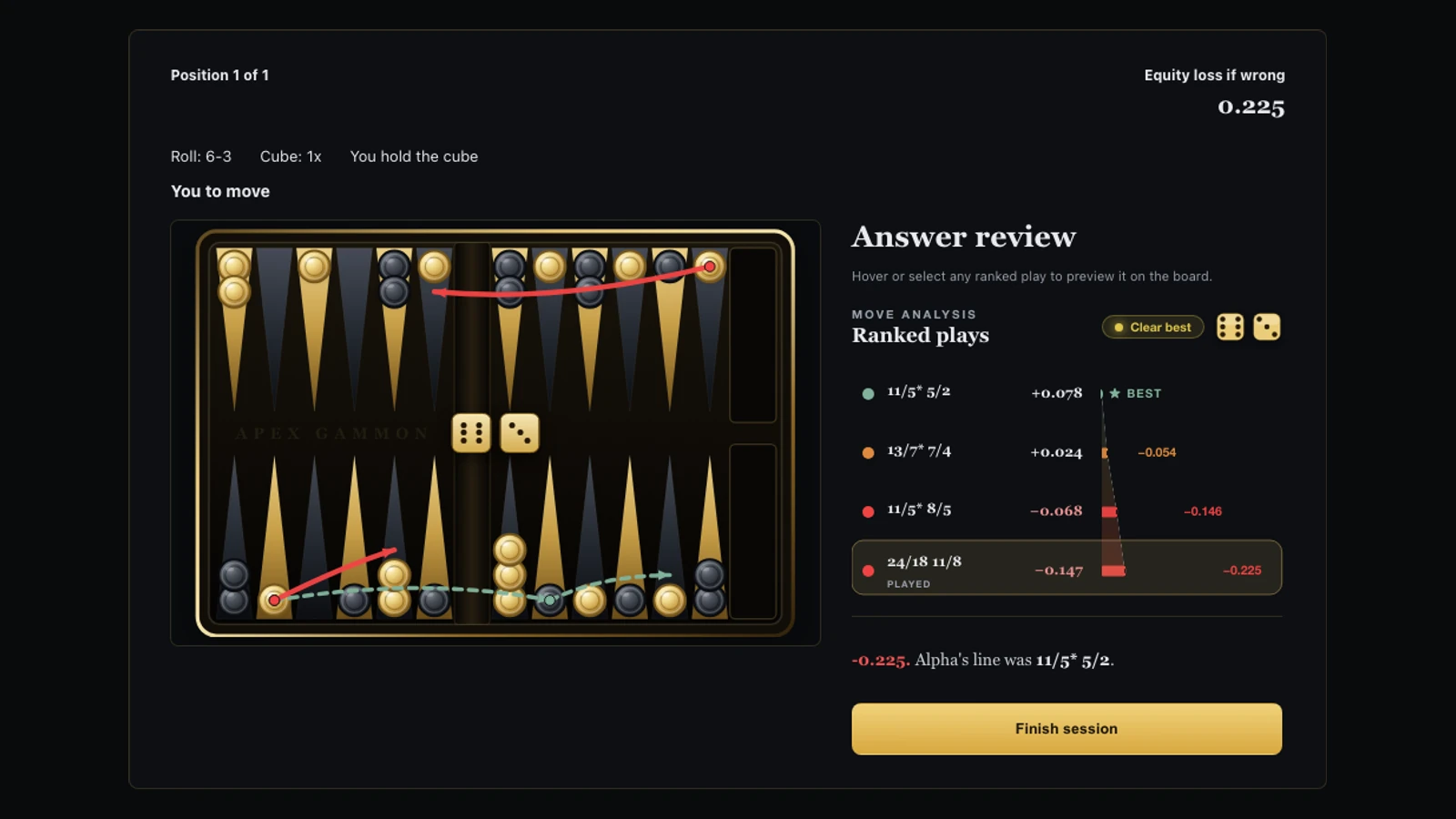
1. Leaving checkers stacked and inactive
Extra checkers on a made point do not strengthen that point. They may be necessary, but large stacks often signal poor distribution. Builders become useful when they are within range of points you want to make and can work together without leaving unnecessary shots.
Review question: did the move improve the flexibility of the whole position, or merely move the safest-looking checker?
2. Racing while contact still matters
A pip lead is important only in context. In contact positions, anchors, primes, timing, threats, and gammons can dominate the raw race. Breaking a valuable anchor or abandoning containment because the pip count looks favorable can turn a controlled position into a tactical loss.
3. Hitting automatically
A hit gains tempo and sends a checker to the bar, but it can also expose blots, break a prime, or give the opponent a better anchor. Ask what happens after the opponent enters. The strongest move may be a quiet point-making play that preserves structure.
4. Misreading bar priority and move order
A checker on the bar must enter before any other checker moves. With two dice, move order can determine whether both dice are playable. Before committing the first half of a roll, compare both orders and check whether one preserves a legal second move.
5. Bearing off without counting misses
In a pure race, taking off the maximum number of checkers is often attractive, but distribution matters. Gaps create wasted rolls. In contact, aggressive bear-off can expose shots or remove checkers that were containing the opponent. Count crossovers, misses, and contact before choosing.
6. Waiting until the cube is obvious
If the opponent will certainly pass after your next good sequence, the opportunity to earn a take has disappeared. Strong cube decisions anticipate market losers. The opposite leak is doubling merely because you are ahead when the position is not strong or volatile enough.
7. Judging the move by the next roll
A good move can be punished immediately, and an error can be rewarded. Outcome-based review trains superstition. Compare the decision using the information available when it was made, then let later rolls answer a different question about luck and result.
A move leaves no immediate shot, but piles a sixth checker on a made point while two useful builders remain disconnected. What should you inspect first?
Train the mistake, not the embarrassment.
Standard Alpha games save costly decisions as private drills so the same pattern can be recognized later.