Backgammon analysis.
Start with the move that cost the most, keep the board beside the ranked alternatives, and separate decision quality from dice luck.
Verdict, turning point, then context.
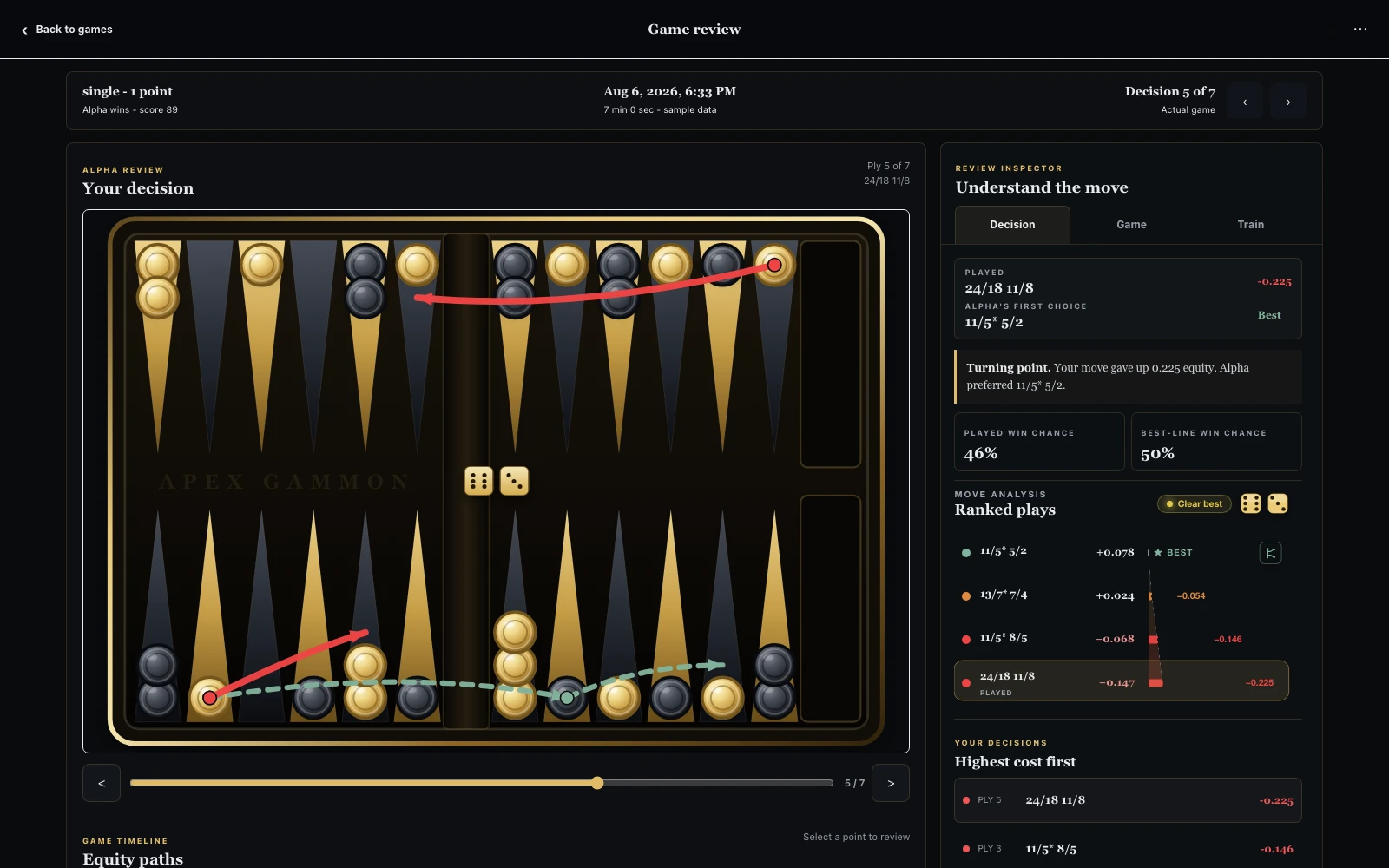
Apex begins with result, score, performance rating, total equity lost, and the costliest decision. The review workspace then joins the board, played move, first-ranked move, alternatives, explanation, and outcome data. The game timeline and optional luck provide context without displacing the decision.
Translate equity loss into PR and score.
This uses the same transparent scale shown in Alpha Review.
What each analysis measure answers.
Performance rating
Average error per reviewed human decision, scaled so lower is better.
Read the full guideTurning pointsEquity lost
The cost of the played move relative to the first-ranked alternative in that position.
Study error bandsGame contextLuck
A separate dice-sequence estimate, requested only when you want it and never confused with skill.
Read the dice policyAnalyze a game you actually played.
Eligible Standard automatic-dice games against Alpha are saved to your private record and open in Alpha Review. Tutor games are unsaved practice and never create post-game analytics.